
We live in a very individualistic culture, and children are constantly presented with opportunities to compete with others. Almost all reality TV shows involve people competing to be the best at something, extra-curricular activities like sports and arts usually involve competing against others, and even school environments are often saturated with ways of comparing children. So, how can we, as teachers, focus on promoting cooperation over competition?
Encouraging cooperation and collaboration in your classroom starts with giving students opportunities to practice these skills. By making collaboration part of your usual routine and showing how much you value it, you can start shifting the competitive culture in your learning space. Here are 8 simple strategies that you can use to promote a more collaborative environment in your classroom.
Encourage Open communication
If children are to collaborate well with each other, they need to be comfortable with communicating. That’s why making it a priority to encourage open communication in the classroom will make the transition to collaborative learning smoother. Check in with your students regularly and give them the time and space to share their thoughts and ideas with you and each other.
Plan Cooperative Projects
A fun way to get students used to working together is to do a whole-class cooperative project. Perhaps you will re-design your bulletin board by having each student contribute a different part of the picture. Or you might try planning a presentation to share with other students, where everyone has a part to play. By introducing the occasional whole-class cooperative project, you are making working together a fun shared experience.
Invite Collaborative Play
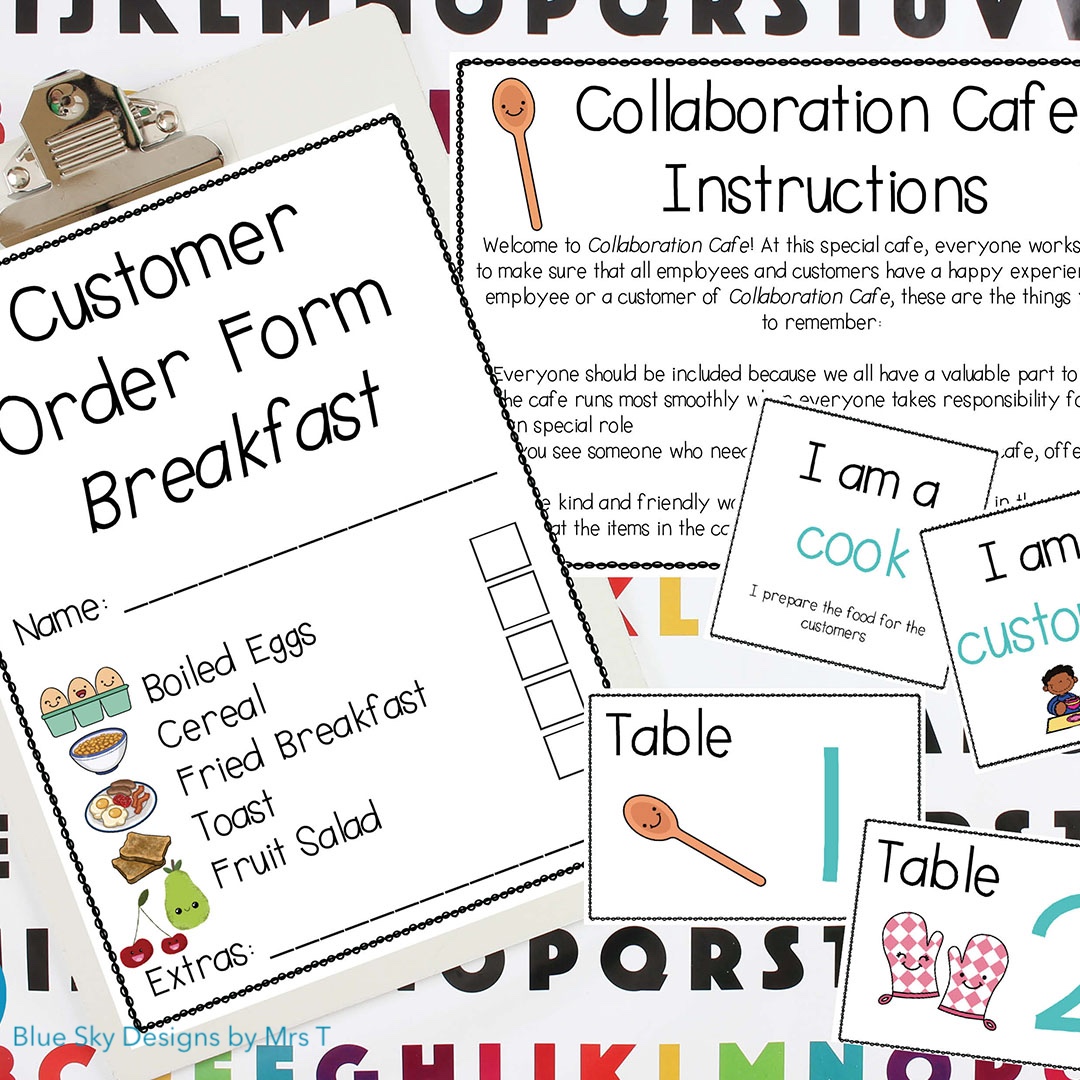
So much learning happens through play, so why not make the most of this opportunity by inviting students to play in collaboration? This works particularly well for younger elementary aged students. This might look like setting up a dramatic play space with a special focus on collaboration. For example, you could set up a café play space and have students each take on a different role in the café. Talk through the importance of everyone playing their role and working together to help the café run. This can then help give you a starting point when talking to students about collaboration in other settings too.
If this sounds like an idea you’d like to try in your classroom, I have a ready-to-use resource to help you set up a Collaboration Café in your classroom. Click here to grab the Collaboration Café printable pack.
Think, Pair, Share
There is a thinking routine called ‘think, pair, share’. It can easily be used in any subject area, and it is a great way to get students sharing their ideas with each other without the added pressure of thinking on the spot. To start with, students are given time to ‘think’ about how they would respond to a given scenario. Then, they ‘pair’ up with someone to discuss their thoughts. Finally, as a pair, they ‘share’ what they discussed to a bigger group of students, or even the whole class. This strategy allows students to ease into sharing their thoughts by taking smaller steps towards sharing to the whole class.
Play Games and Puzzles
Incorporating games and puzzles into your lessons is a simple and effective way to encourage teamwork and collaboration. Students are often eager to participate, and there is a shared goal. While some games can encourage competition, many do still offer a good opportunity to teach cooperation if delivered with that intention. Again, activities like this give you something to reference when continuing conversations about collaboration in other areas.
Work Together on STEM Challenges
STEM challenges provide an excellent opportunity for students to practice working collaboratively. They give students a shared goal and they offer a clear process for students to follow to meet that shared goal. Working on STEM challenges can also give students a chance to identify the unique skills they and their peers bring to the group. Plus, they’re quite easy to tie in with curriculum standards so you’re able to meet academic goals while students are practising an important life skill.
If you want to try a STEM project with your students, I have some ready-to-use STEM challenges to help you out. Click here to grab the STEM Challenges Value Bundle.

Give Group Roles
Begin by making sure students have plenty of chances to work in groups. When they are doing group work, assign group roles for each student so that the expectations of what each group member should contribute are nice and clear. Some of the group roles could include: a group leader, a timekeeper, a scribe, an investigator, and an editor. Over time, the more practice they have working in groups with different roles, the more comfortable and confident they’ll become with collaborative learning.
Set Aside Time For A Focused unit
Finally, if you’d like to change the culture in your classroom, you could try doing a unit focused on collaboration. This does take a little more time but is so worthwhile for your students. And, to save you the effort of planning the unit yourself, I’ve created a Collaboration Skills Small Group Unit, available here. This unit is ideal for counsellors or classroom teachers who are able to work with small groups of students.
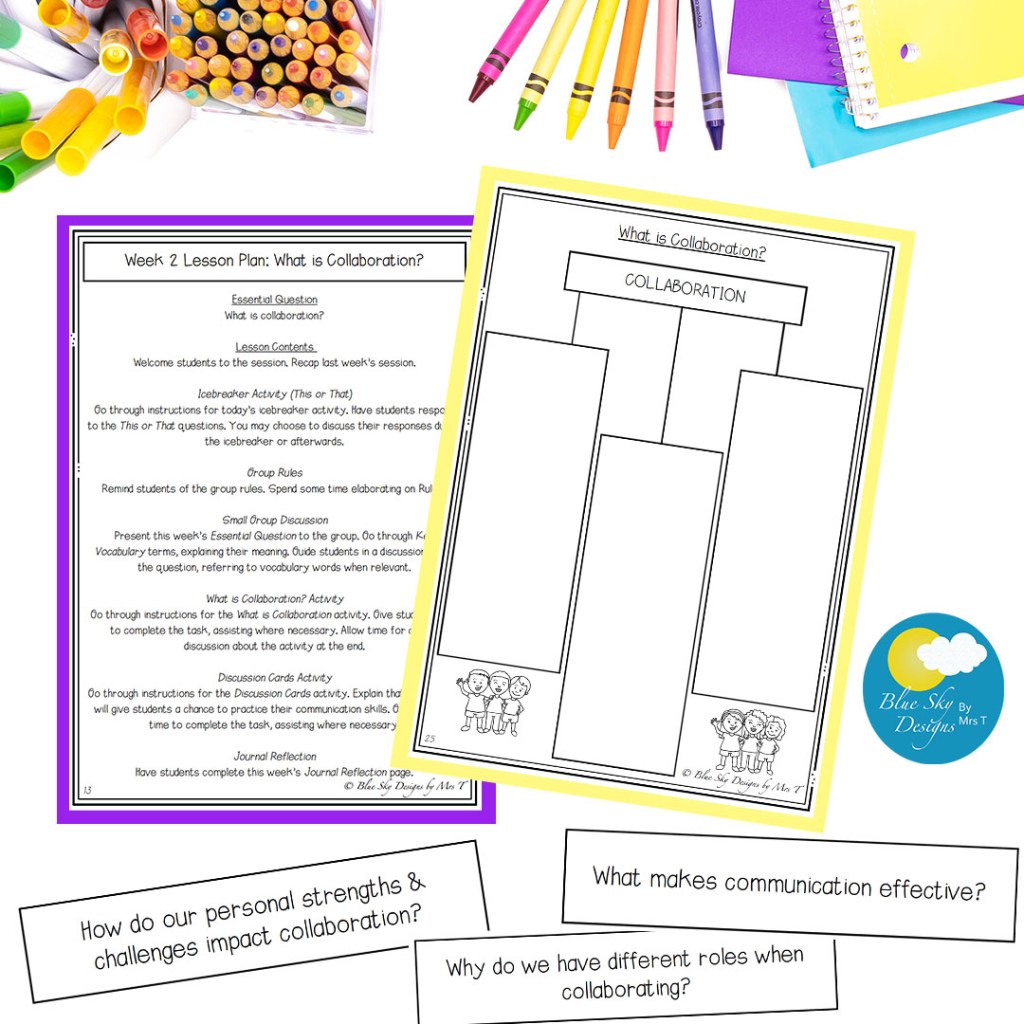
A unit focused on collaboration allows you to really dive deep into what collaboration means and why it’s so valuable. This concept will be very new to many students, so taking the time to talk through what it means to work together and what that looks like will help you to know that everyone’s on the same page when you refer to collaboration in your classroom. Helping them practice working with others and reflecting on skills that are helpful and unhelpful when it comes to collaborating gives them such a valuable opportunity to work on skills that will help them throughout later life. We could all do with more opportunities to support each other and work together.
I hope you are encouraged to try implementing these collaborative learning strategies into your school day! Let’s work to promote cooperation over competition.
If you’d like more teaching ideas, then take a look at this post on integrating English and Maths lessons.
Have a question or a request? You can contact me at blueskydesignsbymrst@gmail.com.

 Mrs T's Musings
Leave a comment